Songs That Say What Conversations Can't: Why I Write About Mental Health in Music
Songs That Say What Conversations Can’t : Why I Write About Mental Health in Music

I found a way to communicate
I was not taught how to write songs. I did not understand the rules of composition, production or performance.
I simply had thoughts and experiences that were difficult to say in ordinary conversation.
Sometimes I could not find the right words. Sometimes the words felt too direct. Sometimes speaking about something made it feel exposed before I had worked out what it meant to me. Silence became easier than explanation.
Songwriting gave me another option.
I could find a line. I could follow it with a melody. I could build a chorus around something I had been unable to say. The process gave shape to thoughts that had previously existed as confusion, frustration or noise.
That is one of the reasons mental health became a recurring theme across The Buey Project. I write about my own experiences and emotional states because songwriting has become one of the ways I understand them. I do not write as an expert. I do not speak for everyone who has struggled. I write from where I have been.

I write about what stays silent
A conversation happens in real time. I have to respond immediately. I have to explain myself while I am still trying to understand what I feel.
A song gives me distance.
I can return to an idea later. I can change a line. I can remove something that feels too personal. I can make a feeling clearer without needing to explain every detail behind it. A melody can carry tension, sadness or relief when ordinary speech feels too limited.
That distance does not erase the difficulty. It gives me a way to look at it.
I have found that writing can turn a private thought into something I can examine. A feeling that once seemed impossible to describe can become a verse. A repeated worry can become a rhythm. A moment of fear can become a chorus that eventually leads somewhere else.
The finished song does not solve everything. It can still create understanding.
I wrote “I Don’t Wanna Live” from a very dark place
“I Don’t Wanna Live” comes from a very dark state of mind. I wrote it to express the weight of thoughts that can make life feel impossible to continue.
I do not present those thoughts as admirable. I do not romanticise suicide. I do not intend the song to encourage anyone to harm themselves. I wrote it because pretending those thoughts do not exist would have been less honest than acknowledging them.
For me, writing the song created some separation between the thought and myself. It allowed me to place the feeling somewhere outside my head and look at it as something I had experienced rather than something that completely defined me.
That distinction matters.
A song can describe despair without making despair a permanent identity. It can document a moment without declaring that the moment will last forever. In my experience, putting the darkest thought into words did not make it stronger. It helped me recognise it.
I know that music is not a substitute for professional support. A song cannot assess risk, provide treatment or replace a trusted conversation with a qualified professional. I include this song as part of my own story, not as an answer for someone else’s crisis.
I use “Drive” to explore escape and movement
“Drive” is connected to the feeling of needing to get away from a state of mind that has become too crowded.
Movement can feel like relief. The road can offer temporary space between me and the thoughts I am trying to understand. The physical act of going somewhere can create the impression that change is possible, even when the destination is not clear.
The song is not about presenting escape as a complete solution. I see it more as an expression of restlessness and the desire to break a cycle.
I have often found that difficult emotions become easier to recognise when I give them an image. A road can represent distance. A vehicle can represent control. Night can represent uncertainty. These images let me approach an experience without having to describe every part of it directly.
That is one of the freedoms I find in music. I can follow the emotional direction of a song instead of trying to fit it into a fixed category. The sound can draw from alternative rock, electronic music or classic rock if that is what the story requires.
The meaning comes first.
I wrote “Red Mist” about anger and restraint
“Red Mist” deals with anger that becomes difficult to control. I wrote it from the experience of feeling overwhelmed by frustration and the desire to react.
Anger can create a dangerous sense of certainty. It can make one response feel obvious while hiding the consequences that come afterwards. I have known what it is like to feel that pressure building.
Writing about it gave me somewhere to put that energy.
The song is not a declaration that anger should control me. It is an examination of what happens when anger takes over the space where judgement should be. I wanted to confront that feeling rather than pretend it was not there.
For me, self-defence and retaliation are not the same thing. Protecting myself or someone I love does not require me to create more damage. Restraint is not always easy, but it can prevent one moment of anger from becoming something permanent.
That tension is important in my writing. I want to be honest about difficult impulses without presenting them as instructions. Meaningful lyrics can show the force of an emotion while still questioning where that emotion might lead.

I wrote “Make It Stop” about a mind that will not switch off
“Make It Stop” focuses on relentless mental noise.
I wrote it around the feeling of being unable to find silence inside my own thoughts. Worry can repeat itself without producing a solution. Fear can become a background presence that never fully disappears. Exhaustion can make the mind less capable of challenging what it is saying.
The song captures that pressure.
I did not want to turn the experience into a clean story with an easy ending. Some thoughts do not resolve neatly. Sometimes the most honest thing I can write is that I am tired, overwhelmed and desperate for the noise to stop.
At the same time, writing the song gave me a form of control. I could decide where the verse ended. I could decide when the chorus returned. I could take an experience that felt chaotic and give it structure.
That structure does not make the feeling imaginary. It makes it visible.
I think this is where music can connect with people who may not have the words for their own experiences. A listener might recognise the atmosphere before recognising the explanation. A melody might communicate exhaustion more effectively than a conversation filled with incomplete sentences.
I am not trying to speak for everyone
I know that mental health is not one experience. I know that people live through different circumstances, challenges and forms of support.
I do not claim that songwriting works for everyone. I only know what it has done for me.
Writing has helped me communicate when conversation felt too exposed or too immediate. It has helped me understand patterns in my thoughts. It has helped me preserve difficult experiences without allowing them to remain shapeless.
I also know that keeping everything inside a song is not always enough. Sometimes I need to speak directly. Sometimes I need help from someone with the training and perspective I do not have.
I encourage anyone in immediate danger or thinking about harming themselves to contact emergency services or a crisis service in their country. I also encourage anyone who needs support to speak with a trusted person or a qualified professional. Find A Helpline provides information about crisis services in different countries.
I include that message because honesty about difficult subjects also requires responsibility.
I want the music to create connection
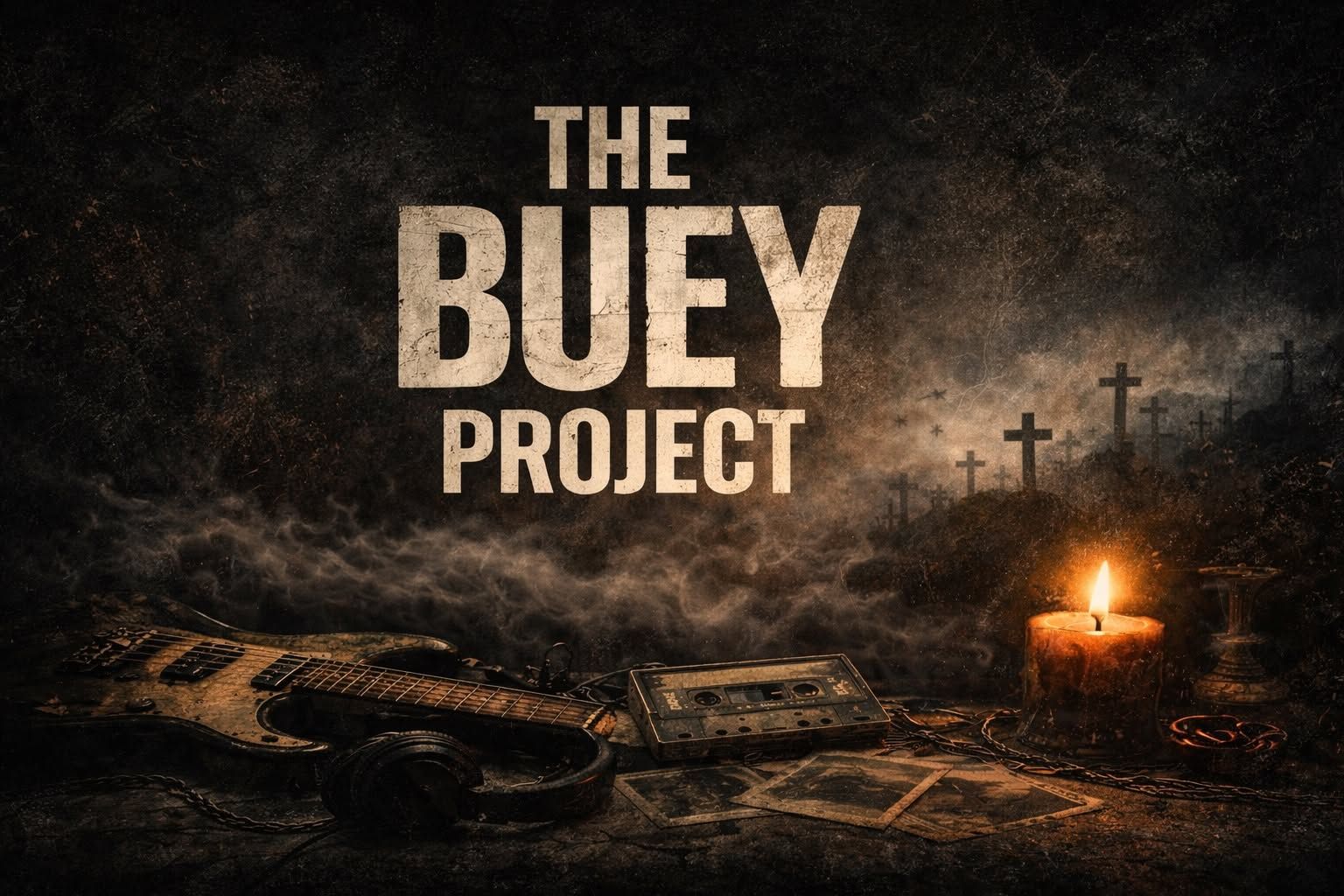
The Buey Project is an independent artist project built around real experiences, honest stories and meaningful lyrics. I write alternative rock and other forms of indie music because the sound needs to serve the emotion rather than follow a fixed formula.
The songs are personal, but I do not want them to remain isolated.
When I release music through The Buey Project on YouTube, I am placing private thoughts into a public space. I cannot control who finds them or what they bring to the music. I can only make sure that the starting point is genuine.
If one listener hears “I Don’t Wanna Live” and feels recognised without feeling encouraged towards harm, the song has achieved something worthwhile.
If someone hears “Drive” and understands their own need for space, that matters.
If “Red Mist” helps someone examine anger before acting on it, that matters.
If “Make It Stop” reminds someone that mental noise can be described, shared and supported, that matters.
I do not expect a song to fix a person’s life. I do not expect an independent music blog or a comment section to replace proper support. I believe music can still open a door.
Sometimes a line is easier to hear than a speech. Sometimes a chorus reaches a place that conversation cannot. Sometimes finding another person’s words helps me keep searching for my own.
That is why I continue writing.
I write to understand what I have lived through. I write to communicate what I cannot always say. I write in the hope that someone else might feel less alone for a few minutes.
If that happens, the music has done something worthwhile.
