Red Mist — A Song About Anger, Consequences and Learning to Walk Away
Red Mist : A Song About Anger, Consequences and Learning to Walk Away

“Red Mist” is a song about an old version of me.
It is not a confession. It is not a defence of harmful behaviour. It is not an argument that anger makes destructive choices acceptable. It is an examination of what anger felt like, how memory can distort it, and how difficult it can be to respond differently when the same pressure appears years later.
The phrase “red mist” is commonly used to describe extreme anger. The image is simple. Clarity disappears. Vision narrows. A person stops seeing the full situation and starts reacting to one immediate feeling. Cambridge Dictionary defines the expression as a state of extreme anger in which it becomes difficult to think clearly. That definition gives the song its central image.
The mist is not the anger itself. It is what anger can do to judgement.
A short fuse
When I was younger, I had a short fuse.
I reacted quickly. I took things personally. I carried grievances for too long. A disagreement could become a challenge. A challenge could become a confrontation. I did not always stop to consider where a reaction might lead.
This is not presented as an excuse. It is a description of an immature mindset.
At that age, I often treated backing down as weakness. I confused control with winning. I believed that answering every perceived slight was a form of strength. That way of thinking creates a narrow world. Everything becomes a test. Every disagreement becomes something to overcome.
The consequences do not need to be described in detail to understand the damage. Anger can damage trust. It can create fear. It can leave permanent marks on relationships and on the person carrying it. The immediate reaction may last seconds. The memory of it can remain for years.
That is the territory explored by “Red Mist”.

Memory does not provide a perfect record
One of the most important ideas in the song appears in the line:
“Memories are a fickle mistress
You don’t remember the event only the last time you remembered it”
Memory is not a neutral recording system. It changes when it is revisited. Details can become sharper or less reliable. Emotion can increase. The story we tell ourselves can become more certain than the facts justify.
Anger makes this process more dangerous.
A person may remember the insult but forget the build-up. They may remember feeling threatened but not recognise how their own behaviour contributed to the situation. They may remember the final exchange and ignore everything that came before it. Repetition can turn a partial memory into a complete personal belief.
That belief can then become self-justification.
The lyric “I’d never believe I ever made a mistake” is intended to expose that mindset. It is not a statement of principle. It is a criticism of the refusal to accept personal responsibility. The younger version of me wanted to be right. He did not want to examine his part in anything.
That is how anger protects itself. It edits the evidence.
The language of the song
The lyrics use direct and sometimes dramatic images:
“I’d drive the same road
I’d start the same fire
I’d carry the same load
I’d fight the same fight”
These lines should not be read as a factual account of specific events. They are songwriting language. They represent repetition, escalation and the belief that the past would be handled in the same way if it happened again.
Songwriting can compress years of emotion into a few images. It can use fire, fists, roads and battles as symbols. The fire can represent escalation. The road can represent a familiar pattern. The load can represent accumulated resentment. The fight can represent the internal need to keep proving a point.
The meaning is psychological rather than operational.
The song is interested in the mindset behind the image. It asks what happens when a person keeps carrying the same anger and continues choosing the same response. It also asks whether the person is being honest when they claim they would do everything the same way again.
The answer is not simple.
Some memories still feel justified. Some old reactions still appear understandable from the inside. That does not make them healthy, safe or acceptable. Understanding the emotional logic of a past mindset is not the same as approving it.
SYSTEM NOTE: explanation is not endorsement.
Meeting my wife changed the calculation
The major turning point in my life was meeting my wife nearly 25 years ago.
The anger did not vanish immediately. I still had the same temperament. I still felt provoked. I still experienced the same physical signs. The difference was that my choices began to carry more weight.
Responsibility changed the calculation.
Love changed it as well. Having a wife meant that my actions were no longer isolated from the people around me. There was more to protect. There was more to lose. A reaction that once seemed personal could affect my entire home.
That did not make restraint automatic. It made restraint necessary.
I began to understand that walking away is not the same as surrender. Not responding immediately is not the same as accepting mistreatment. Choosing a pause is not a failure of courage. It is a decision to prevent anger from controlling the outcome.
The line:
“I pick my battles instead of
reacting just for fun”
marks that change.
The wording is intentionally plain. There is no claim that I became a different person overnight. There is no claim that anger stopped existing. The change is in the response. Anger can still appear. It does not have to receive instructions.

The red mist can return
The song was also shaped by a current stressful situation affecting my family.
No details are necessary here. The situation is personal. The pressure is real. The frustration is real. The protective instinct is real.
That combination can bring old reactions close to the surface.
The red mist does not only belong to the past. It can reappear when a person feels ignored, threatened, powerless or responsible for protecting people they love. The difference now is that I recognise the warning signs. I know what the feeling can become if I allow it to dictate my behaviour.
The current priority is control.
That means pursuing proper channels. It means documenting concerns appropriately. It means allowing processes to operate. It means refusing to turn frustration into a personal confrontation. It means accepting that anger may be justified as an emotion while still requiring discipline in how it is expressed.
This is not passive acceptance. It is deliberate restraint.
There is a difference between defending a boundary and seeking revenge. There is a difference between reporting a concern and escalating a conflict. There is a difference between protecting a family and allowing fear to make decisions.
“Red Mist” sits inside that difference.
What the song admits
The song admits that anger can become part of a person’s identity.
It admits that old habits are difficult to remove. It admits that memory can support a flattering version of events. It admits that some people can spend years defending their reactions instead of examining them.
It also admits that change is possible.
The chorus repeats:
“I’d clench my fist
For the red mist”
The clenched fist is a symbol of tension. It is the physical response before the decision. It represents the point at which the body is preparing for action while the mind is still capable of choosing another direction.
That moment matters.
There may be only a short period between feeling anger and acting on it. The objective is to recognise that period. Create distance. Delay the response. Remove the audience. Stop feeding the argument. Use the available proper routes. Return to the situation only when control has been restored.
No dramatic transformation is required. The work is repetitive. The choice is made again and again.
Learning to walk away
“Red Mist” is not a song about becoming harmless or emotionless.
Anger can identify that something matters. It can signal a boundary. It can expose fear, disappointment or a sense of injustice. The problem begins when anger becomes the decision-maker.
The aim is not to deny the feeling. The aim is to stop treating the feeling as an order.
Nearly 25 years of marriage and family life have given me reasons to practise that distinction. I still get angry. I still have difficult moments. I still feel the old pressure in certain situations.
But I have not responded in the same way.
That is the point of the song.
It looks at the younger man who reacted first and reflected later. It examines the memories that kept old anger alive. It questions the belief that every confrontation must be answered. It recognises the damage created by refusing responsibility.
Then it reaches the present.
I am older. I am more aware. I have more responsibility. I am still capable of anger. I am also capable of choosing what happens next.
ACTION: pause.
ACTION: create distance.
ACTION: use proper channels.
ACTION: do not let the mist decide.
“Red Mist” is an honest artistic examination of an old mindset and the continuing work of restraint. It does not ask the listener to admire anger. It asks the listener to recognise it before it takes control.
The past cannot be rewritten. The next response can still be chosen.
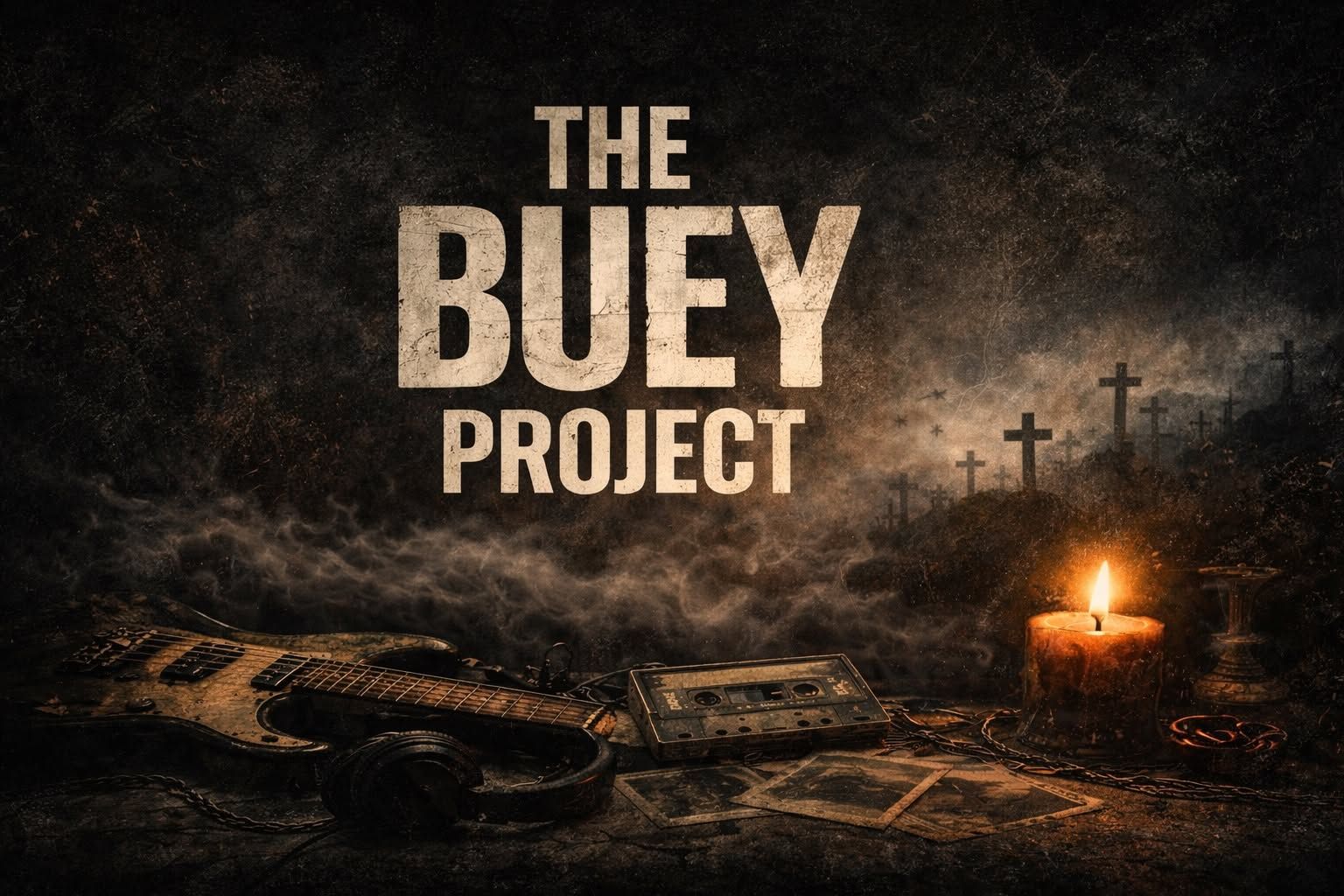
Listen to The Buey Project on YouTube for “Red Mist” and the wider catalogue, including Where I Am, Still Here and Carry On.